

Drying is an important part of any car wash. The wrong towel can leave water streaks, lint or even fine marks on the paint. A good microfiber car drying towels should do two things well: absorb water quickly and stay gentle on the vehicle surface.
For car care brands, wholesalers and detailing suppliers, these are also two of the most important factors to consider when sourcing microfiber car drying towels.
Why Absorbency Matters
A more absorbent towel removes water with fewer passes. This makes drying faster and reduces the need to repeatedly wipe the same area.
Microfiber is well suited for this job because its fine fibers provide a large surface area for collecting moisture. However, actual absorbency depends on several factors, including fiber quality, GSM, microfiber blend and fabric construction.
This is why GSM should not be the only specification used to judge a drying towel.
A higher-GSM towel generally feels thicker and can hold more water, but two microfiber car drying towels with the same GSM may perform very differently depending on the yarn and construction.
Why Scratch-Free Drying Matters
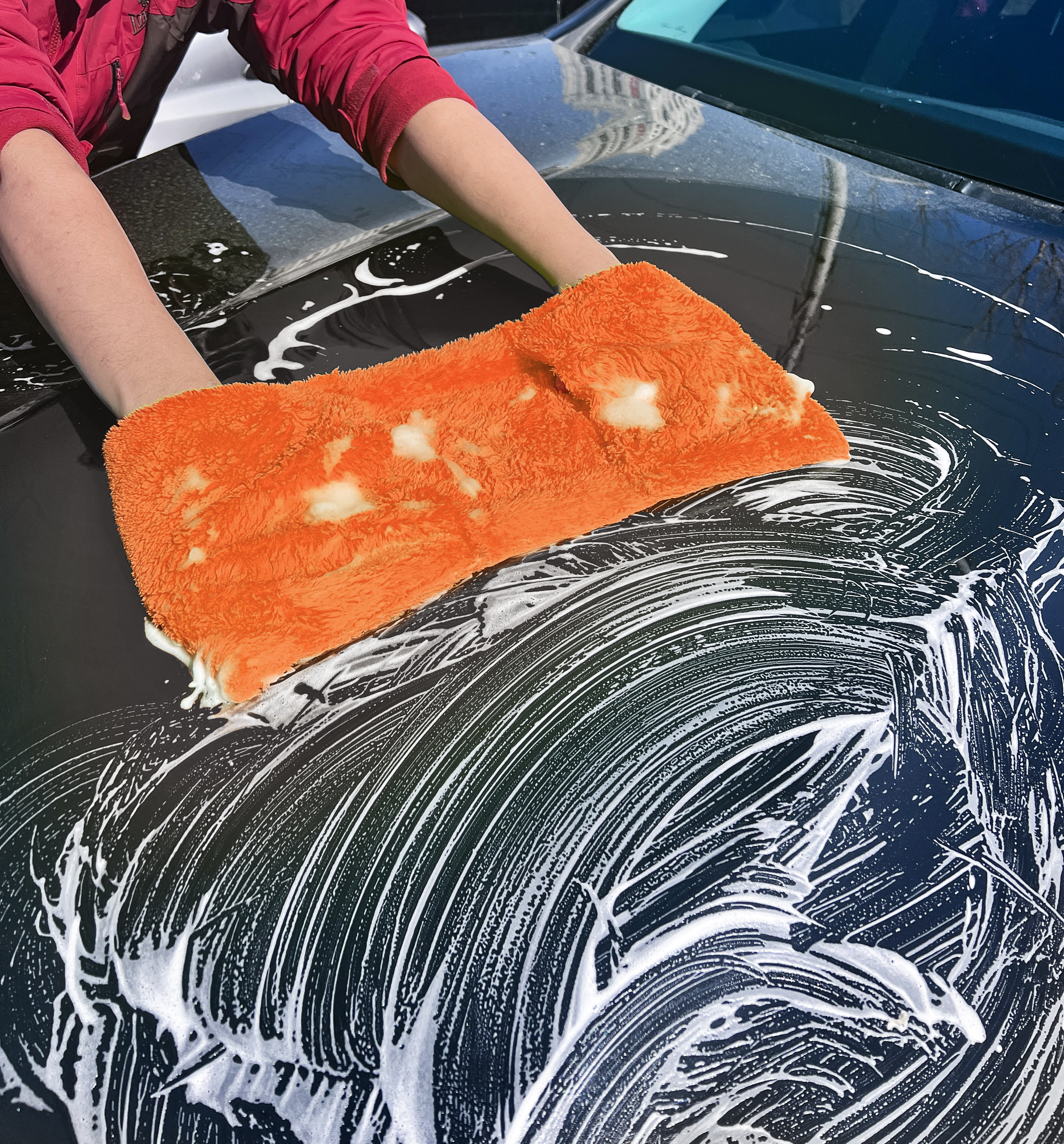
Car paint and clear coat can develop fine scratches when dirt or small particles are dragged across the surface.
A quality microfiber towel provides a soft contact surface and helps reduce unnecessary friction during drying. High absorbency also helps because less wiping is needed to remove the remaining water.
The towel edge should also be considered. Soft edging or an edgeless design is often preferred for microfiber car drying towels that come into direct contact with painted surfaces.
Of course, even a high-quality towel needs to be kept clean. Dirt trapped in the towel can increase the risk of scratching.
Twisted-Loop Microfiber for Car Drying
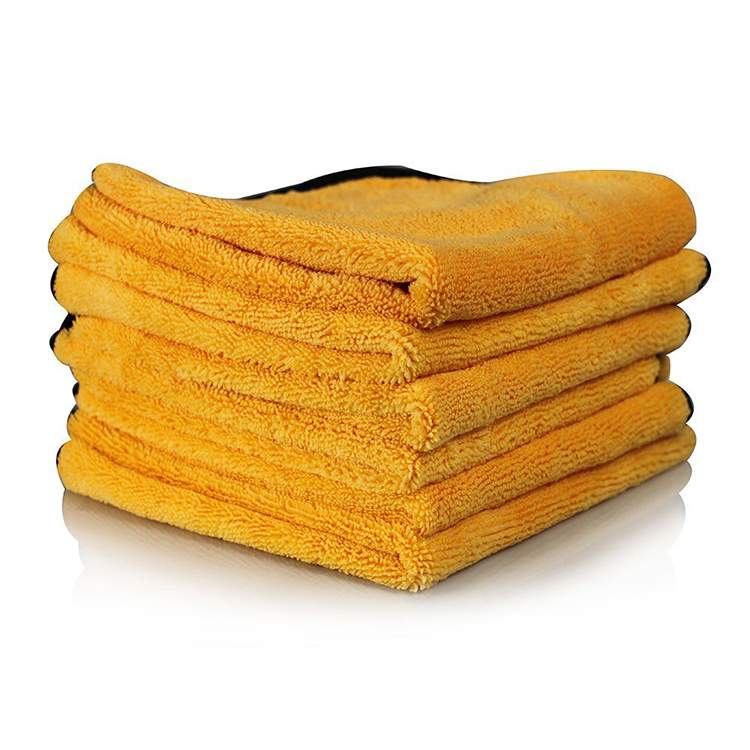
Twisted-loop microfiber car drying towels are widely used in car detailing.
Their long twisted fibers provide plenty of surface area to pick up water, making them especially suitable for drying larger panels such as roofs, hoods and doors.
For premium car care ranges, twisted-loop construction is a popular option because it combines strong absorbency with a soft feel and efficient drying performance.
Plush microfiber is another option and can work well depending on the intended application and target price.
GSM and Microfiber Blend
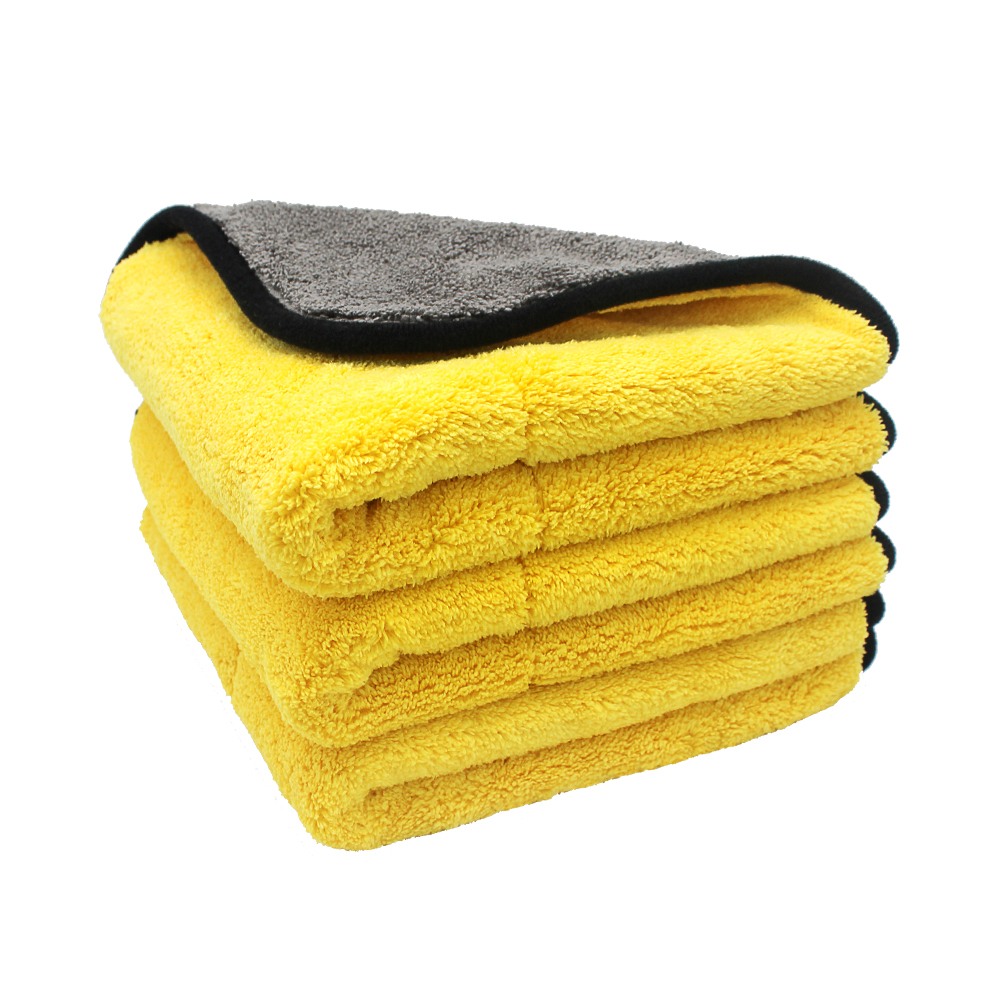
GSM refers to the weight of the microfiber fabric in grams per square meter.
Higher GSM can provide greater water-holding capacity, but heavier does not always mean better. The ideal GSM depends on the towel size, construction and intended use.
The microfiber blend also affects performance. Common options include 80/20 and 70/30 polyester/polyamide.
Both can be suitable for automotive drying. Rather than focusing on the blend alone, buyers should also consider fiber quality, softness, absorbency and durability after washing.
What Should Buyers Consider?
When sourcing an OEM microfiber car drying towels, specifications can be adjusted for different markets and price levels.
Key points to consider include:
- GSM
- Polyester/polyamide ratio
- Twisted-loop or plush construction
- Towel size
- Edge design
- Color
- Logo and label
- Packaging
- Absorbency
- Lint performance
- Wash durability
For an everyday car care range, durability and cost may be the priority. For professional detailing or premium retail products, buyers may prefer higher absorbency, softer construction and upgraded finishing.
Choosing the Right Microfiber Car Drying Towel
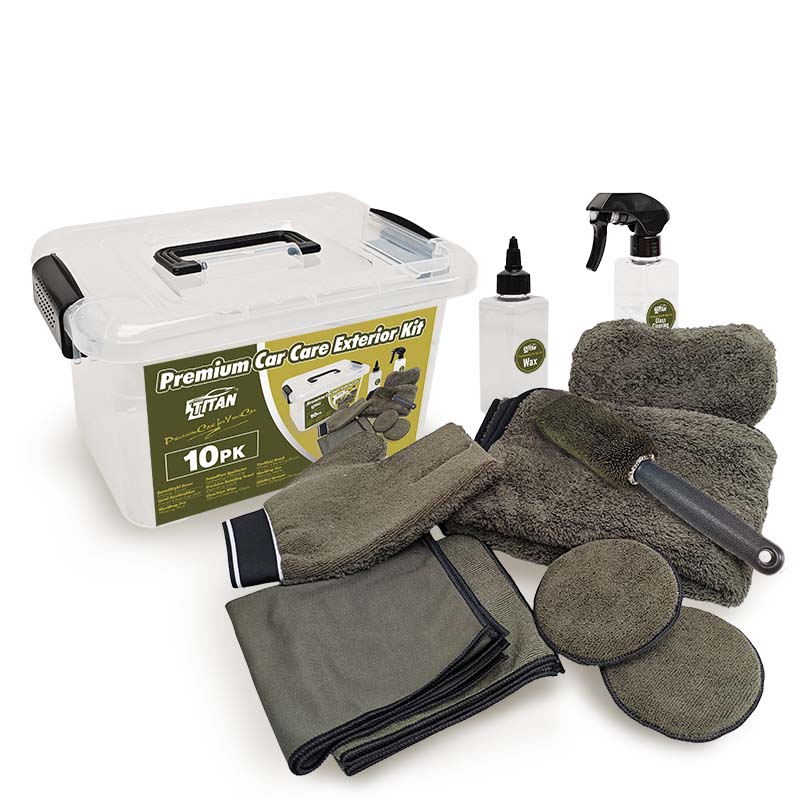
There is no single specification that works for every microfiber car drying towels.
The best product is a balance of absorbency, softness, drying efficiency, durability and cost. GSM is important, but fiber quality, weave, size and edge construction also affect how the towel performs.
For car care brands and distributors, choosing the right combination of these specifications can help create a microfiber car drying towels that is practical, paint-friendly and suitable for its target market.